
Sustained, honest cardio that no walker, jogger, or dog park can match. Done daily by a disciplined human, on a onewheel, in Southern Oregon.
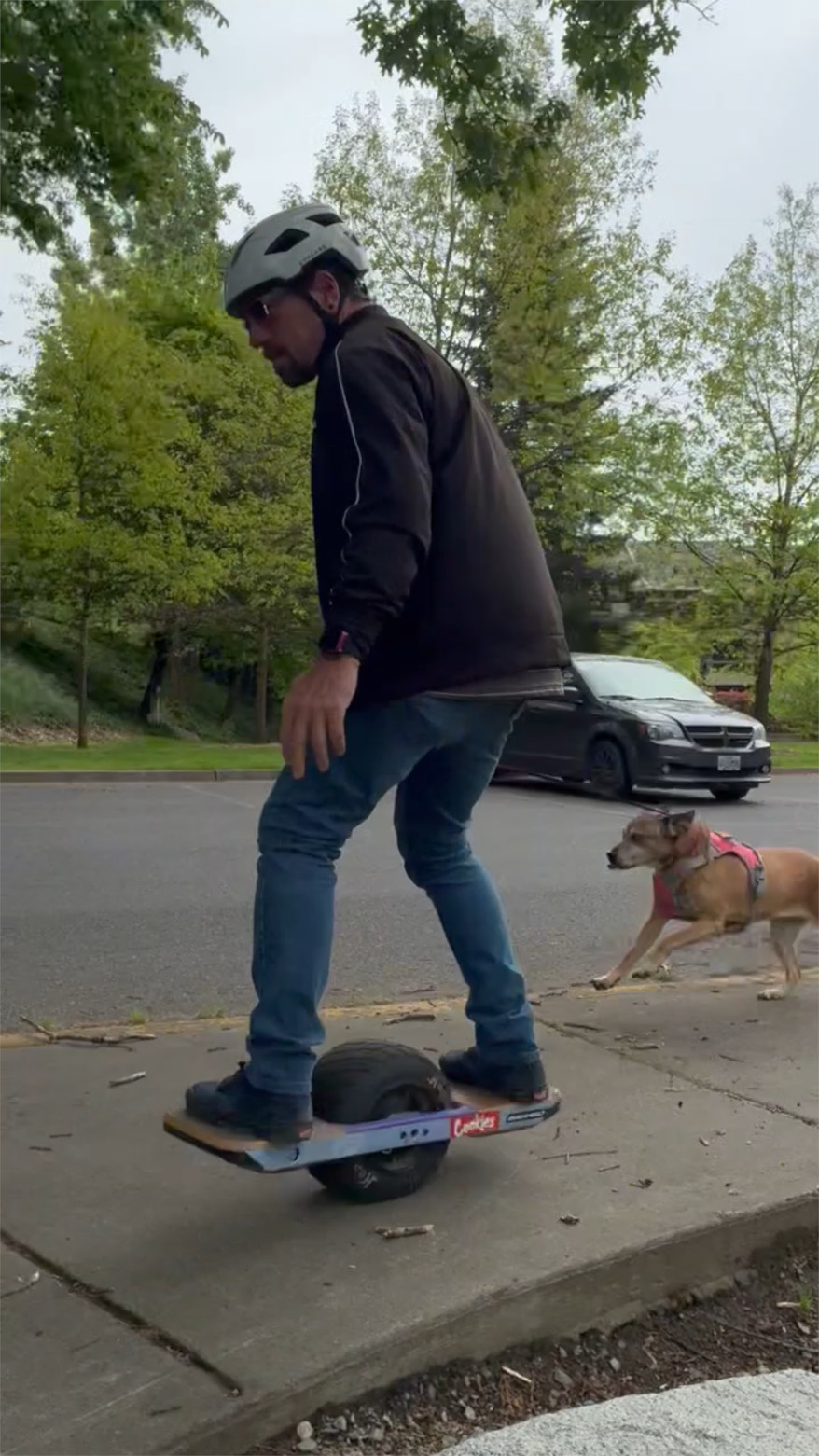
The destructive chewing. The pacing. The reactivity on walks. The full-blown meltdown the moment the doorbell rings. These aren't behavior problems. They're signals of a dog whose body and brain are built for hours of movement — living in a house where it gets a 34-minute walk, 1.3 times a day.
This is what happens when fitness is a biological requirement, not a choice. A working dog's skeleton, cardiovascular system, and nervous system were built — over centuries of selective breeding — to move for hours every day. When a dog doesn't move like that, the system doesn't work right. The stress hormones stay elevated. The joints stiffen. The weight accumulates. The behavior cracks. You're not seeing a bad dog. You're seeing a dog in biological distress.
Veterinary consensus on what a working-breed dog actually needs is 60 to 120 minutes of vigorous daily exercise. Most owners deliver a fraction of that. For a Border Collie or a Malinois, that's a daily deficit of nearly two hours. Every day, for years. The dog's body doesn't understand why it can't move. It just knows it's trapped.
That's a gap no walking service can close.
The math of high-drive dog ownership doesn't add up on foot. Here's what a vet would tell you, and what the actual day looks like.
Of vigorous, sustained cardiovascular exercise. Daily. The veterinary baseline — and for working breeds like Border Collies, Malinois, and Huskies, the real number runs closer to two or three hours a day.
A single walk of stop-start sniffing, leash slack, and human-pace movement. On average, 1.3 times a day. Nearly 60% of owners skip at least one walk a week, most often to weather, work, or fatigue.
59% of U.S. dogs are now classified as overweight or obese by veterinarians — an all-time high. Only 17% of owners realize their dog is one of them.
Sustained 10–15 mph runs. Two to five miles per session. Done on a onewheel — the only realistic way for one human to move a strong dog at sustained speed for that distance, safely, every day. This is the pace sled dogs hold for hours. The pace a working farm dog moves at all day. The pace your dog's body recognizes as real work.
This is not a treadmill trick. Not a daycare add-on. Not a dog walk with a different label. It is the kind of movement a working dog gets in its biological life — applied to a dog living in a house, on a leash, in a town that wasn't built for it.
After a few weeks of this, owners tell me the same thing: the dog is finally settled at home. The chewing stops. The reactivity drops. The evenings get quiet again. Not because we "trained" the behavior away. But because the dog is finally moving like it needs to.
Structured, high-intensity endurance work is one of the most-studied interventions in veterinary medicine. What follows isn't opinion. It's what the peer-reviewed literature says happens to a dog when this kind of work becomes part of their life.
That pace is not aggressive. For working and herding breeds, it's the biologically correct sustained-endurance pace — the same pace sled dogs hold for hours. What happens when a dog actually gets it, measured in peer-reviewed trials:
In a controlled trial of overweight dogs, structured exercise plus diet produced rapid, sustained fat loss — while preserving lean muscle. The diet-only group lost muscle alongside fat.
Structured endurance exercise physically remodels the canine heart — lower resting rate, higher cardiac output, increased left ventricular dimension. The same adaptations seen in human endurance athletes.
The landmark 14-year Purina Life Span Study followed Labrador Retrievers from puppyhood to death. Dogs kept in lean body condition lived a median of 13.0 years vs. 11.2 — and showed fewer signs of aging throughout.
In the same Purina study, arthritis prevalence by age 8 was 77% in overfed dogs and only 10% in lean, exercised dogs. Same breed. Same age. Different protocol.
Read the research PDF · 2 pages →Real sessions. Real dogs. Real terrain in Southern Oregon. No staging, no slow motion, no music swelling at the end.
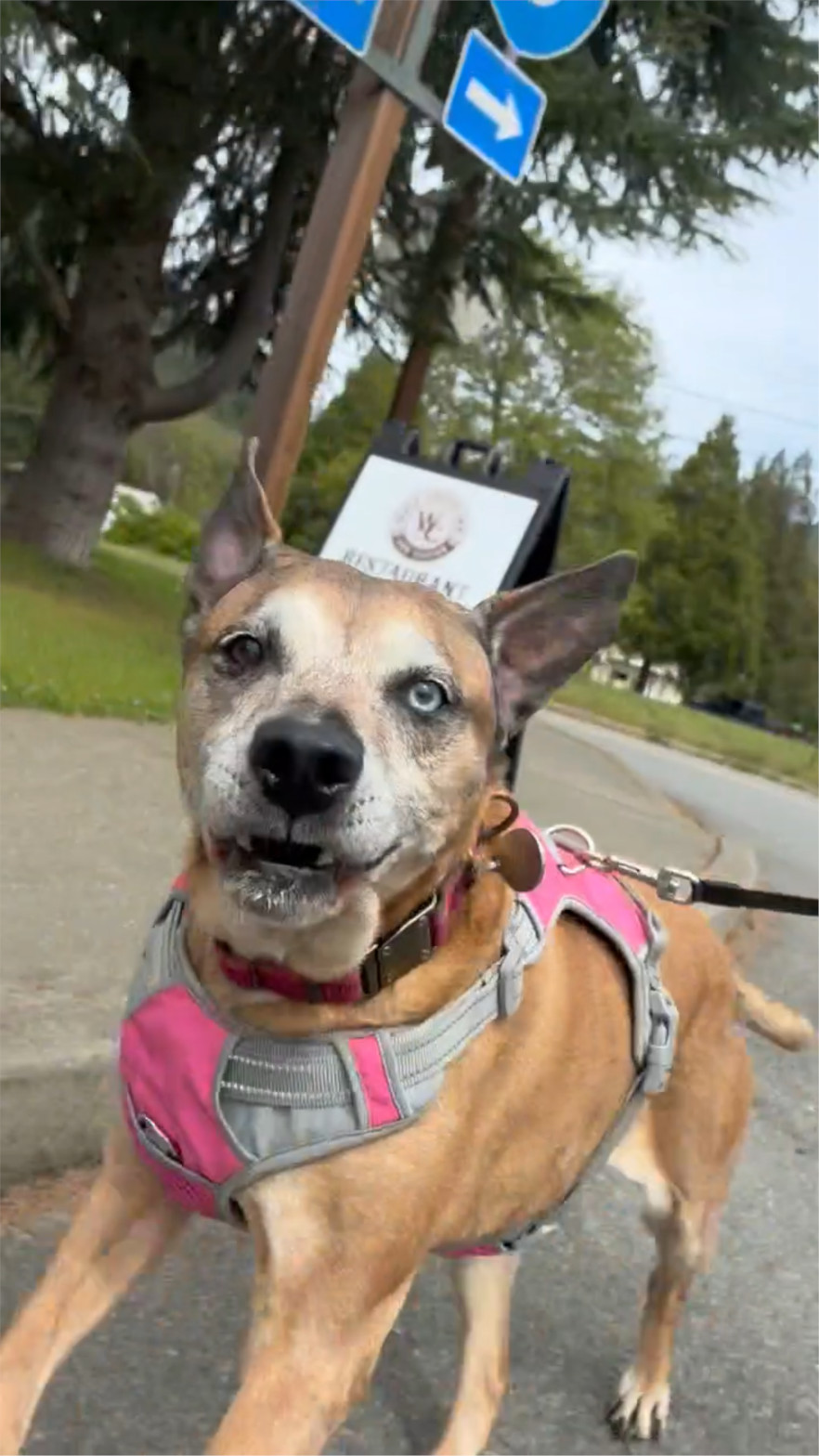
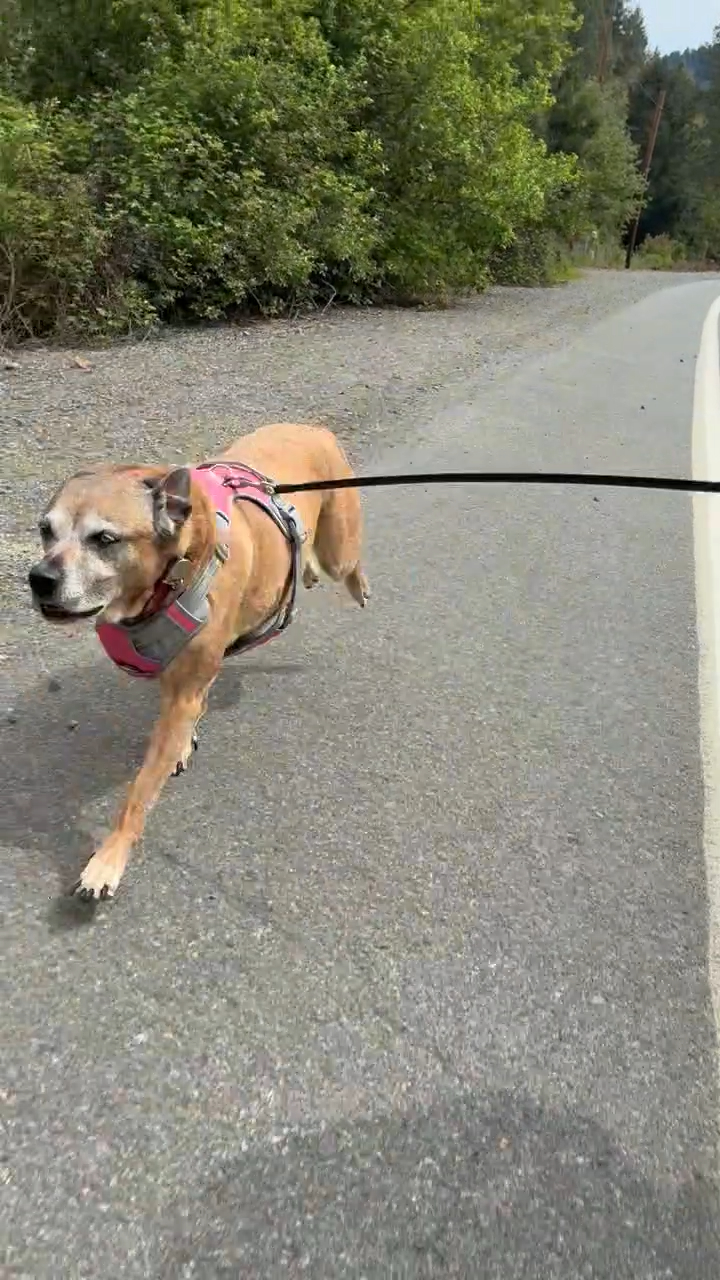
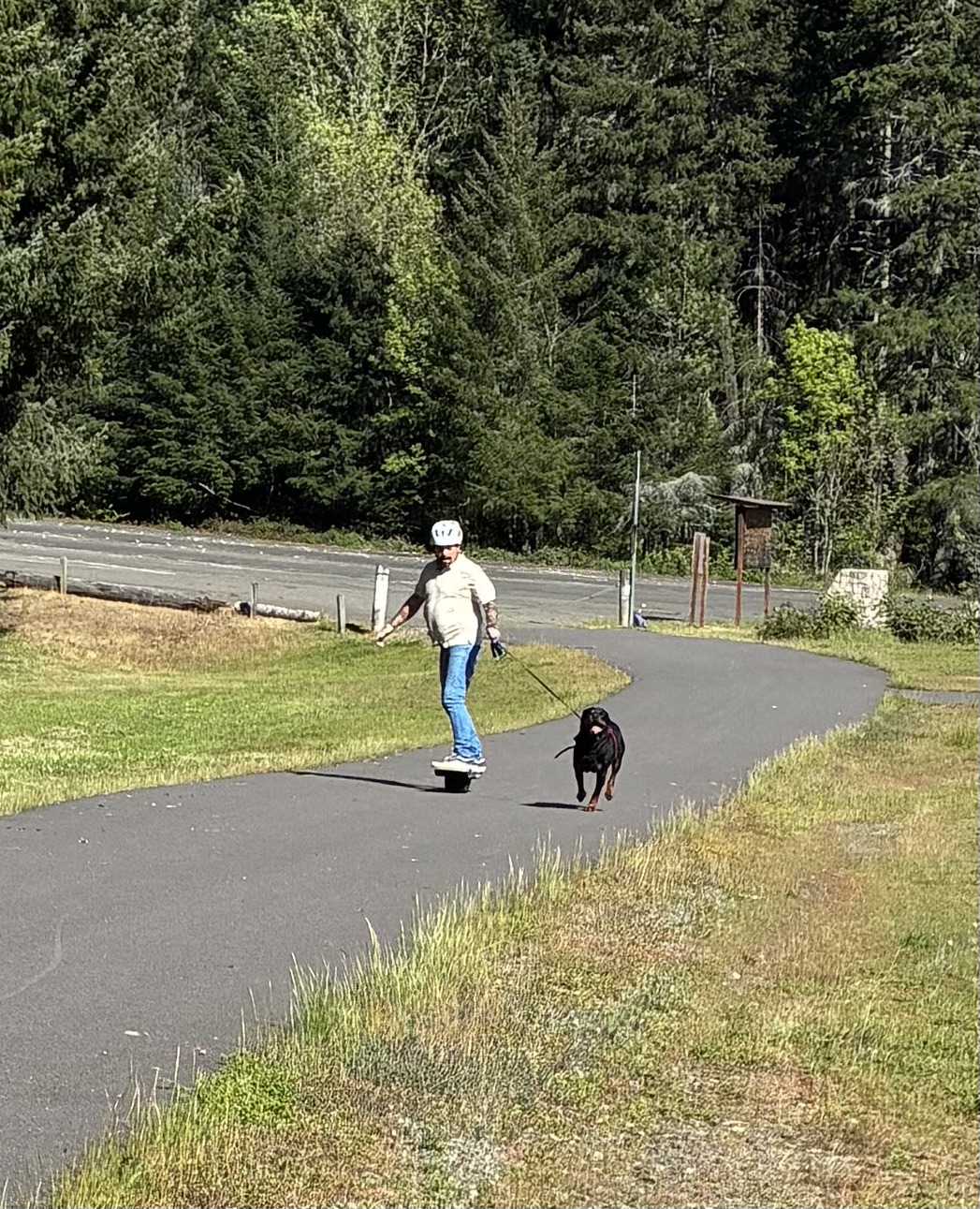
Almost all dogs benefit from sustained cardio — but working breeds and high-energy dogs need it. Owners who know their dog needs more than a walk. Who have tried the conventional answers and watched them fail. Who want their evenings, their furniture, and their relationship with their dog back.
The Settled Dog is run by Victor, founder and sole operator. No employees. No subcontractors. Your dog is run by the person you talked to on the phone.
Based in Wolf Creek. Serving Ashland to Roseburg along the I-5 corridor.
Two hundred and fifty miles of personal experience running working dogs by onewheel — before this was ever a service offered to anyone else.
I'll respond within 24 hours to set up a brief phone call, talk through whether your dog is a fit, and discuss next steps.
I offer a free consultation to talk through whether this is the right fit for your dog before any commitment.
Thanks.
I'll be in touch within 24 hours. — Victor